Showing posts with label psoriasis. Show all posts

Sunday, October 28, 2012

World Psoriasis Day


(Google Image) 
By Nurse Diane

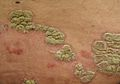
There is a commercial on TV where a man is serving food from a mobile trailer.  As he is handing out the order, the sleeve on his shirt raises up and you can notice red patches on his skin.  He is embarrassed, and then it cuts away to a medication to cure the condition.  Psoriasis is a common skin condition that causes skin redness and irritation. Most people with psoriasis have thick, red skin with flaky, silver-white patches called scales.  It can occur with anyone, but it is usually more common if other family members have it.  People get it from the ages of 15 to 35 years of age, and it is not contagious.

Treatment is to control the symptoms, and this is usually done with topical creams, and in more severe cases, pills or injections.  Psoriasis is a life-long condition that can be controlled with treatment. It may go away for a long time and then return. With appropriate treatment, it usually does not affect your general physical health.

(Google Image) 
Today is World Psoriasis Day.  According to http://www.worldpsoriasisday.com/ it is an annual day specially dedicated to people with psoriasis/psoriatic arthritis. Conceived by patients for patients, World Psoriasis Day is a truly global event that sets out to give an international voice to the 125 million people with psoriasis/psoriatic arthritis. The goals for the day include:
  • Raising awareness: to let people with psoriasis know that they are not alone and to raise the profile of this devastating skin disease and the misery it can cause. To dispel myths about the condition, such as the mistaken view that psoriasis is contagious.
  • Improving access to treatment: to encourage healthcare systems, governments, physicians, careers and all those responsible for psoriasis care to allow psoriasis sufferers access to optimum therapy. For too long, psoriasis/psoriatic arthritis has been low priority. They are debilitating diseases and must move up the healthcare agenda.
  • Increasing understanding: to provide information to those who are affected by the condition as well as the general public in order to educate people about the condition so that they can discuss it more openly and confidently.


Building unity among the psoriasis community: to provide a platform from which patient voices from around the world can speak as one and be heard by key decision makers.

(Google Image) 

For more information visit the site: http://www.worldpsoriasisday.com/

Saturday, October 29, 2011

10/29 Psoriasis Therapy Month


By Diane Forrest, RN

You may remember the "Heartbreak of Psoriasis" commercial.  This was a commercial selling Tegrin medicated shampoo.  It was a treatment for psoriasis, but they never really told you what that was.

Psoriasis is a common skin condition that causes skin redness and irritation. Most people with psoriasis have thick, red skin with flaky, silver-white patches called scales.
Psoriasis is a very common condition. The disorder may affect people of any age, but it most commonly begins between ages 15 and 35.

The condition cannot be spread to others.

Psoriasis seems to be passed down through families. Doctors think it probably occurs when the body's immune system mistakes healthy cells for dangerous substances
The following may trigger an attack of psoriasis or make the condition more difficult to treat:
  • Bacteria or viral infections, including strep throat and upper respiratory infections
  • Dry air or dry skin
  • Injury to the skin, including cuts, burns, and insect bites
  • Some medicines, including antimalaria drugs, beta-blockers, and lithium
  • Stress
  • Too little sunlight
  • Too much sunlight (sunburn)
  • Too much alcohol


Symptoms:
  • Psoriasis can appear suddenly or slowly. In many cases, psoriasis goes away and then flares up again repeatedly over time.
  • People with psoriasis have irritated patches of skin. The redness is most often seen on the elbows, knees, and trunk, but it can appear anywhere on the body. For example, there may be flaky patches on the scalp.


The skin patches or dots may be:
  • Itchy
  • Dry and covered with silver, flaky skin (scales)
  • Pink-red in color (like the color of salmon)
  • Raised and thick


Treatment:
The goal of treatment is to control your symptoms and prevent infections.

In general, three treatment options are used for patients with psoriasis:
  • Topical medications such as lotions, ointments, creams, and shampoos
  • Body-wide (systemic) medications, which are pills or injections that affect the whole body, not just the skin
  • Phototherapy, which uses light to treat psoriasis


Most cases of psoriasis are treated with medications that are placed directly on the skin or scalp:
  • Cortisone creams and ointments
  • Creams or ointments that contain coal tar or anthralin
  • Creams to remove the scaling (usually salicylic acid or lactic acid)
  • Dandruff shampoos (over-the-counter or prescription)
  • Moisturizers
  • Prescription medicines containing vitamin D or vitamin A (retinoids)


If you have an infection, your doctor will prescribe antibiotics.

You may try the following self-care at home:
  • Oatmeal baths may be soothing and may help to loosen scales. You can use over-the-counter oatmeal bath products. Or, you can mix 1 cup of oatmeal into a tub of warm water.
  • Sunlight may help your symptoms go away. Be careful not to get sunburned.
  • Relaxation and ant stress techniques may be helpful. The link between stress and flares of psoriasis is not well understood, however.
  • Some people may choose to have phototherapy.
  • Phototherapy is a medical treatment in which your skin is carefully exposed to ultraviolet light.
  • Phototherapy may be given alone or after you take a drug that makes the skin sensitive to light.
  • Phototherapy for psoriasis can be given as ultraviolet A (UVA) or ultraviolet B (UVB) light.


Prevention:
  • There is no known way to prevent psoriasis. Keeping the skin clean and moist and avoiding your specific psoriasis triggers may help reduce the number of flare-ups.
  • Doctors recommend daily baths or showers for persons with psoriasis. Avoid scrubbing too hard, because this can irritate the skin and trigger an attack.


The main thing to remember is that it is not contagious, and those who suffer from it lead a very embarrassing and isolating life.  If you know someone who has this condition, or see someone with scaly patches, do not stare or ask questions, just show support and understanding. 

For more information visit this site;http://www.psoriasis.org/


Thursday, August 11, 2011


Today I want to inform you about psoriasis.  August is Psoriasis Awareness Month.  Some of you may remember the "Heartbreak of Psoriasis" commercial. This was a commercial selling Tegrin medicated shampoo.  It was a treatment for psoriasis, but they never really told you what that was.

Psoriasis is a common skin condition that causes skin redness and irritation. Most people with psoriasis have thick, red skin with flaky, silver-white patches called scales.

Psoriasis is a very common condition. The disorder may affect people of any age, but it most commonly begins between ages 15 and 35.

The condition cannot be spread to others.

Psoriasis seems to be passed down through families. Doctors think it probably occurs when the body's immune system mistakes healthy cells for dangerous substances
The following may trigger an attack of psoriasis or make the condition more difficult to treat:
  • Bacteria or viral infections, including strep throat and upper respiratory infections
  • Dry air or dry skin
  • Injury to the skin, including cuts, burns, and insect bites
  • Some medicines, including anti-malaria drugs, beta-blockers, and lithium
  • Stress
  • Too little sunlight
  • Too much sunlight (sunburn)
  • Too much alcohol

Symptoms:
  • Psoriasis can appear suddenly or slowly. In many cases, psoriasis goes away and then flares up again repeatedly over time.
  • People with psoriasis have irritated patches of skin. The redness is most often seen on the elbows, knees, and trunk, but it can appear anywhere on the body. For example, there may be flaky patches on the scalp.
  • The skin patches or dots may be:
  • Itchy
  • Dry and covered with silver, flaky skin (scales)
  • Pink-red in color (like the color of salmon)
  • Raised and thick

Treatment:
  • The goal of treatment is to control your symptoms and prevent infections.
  • In general, three treatment options are used for patients with psoriasis:
  • Topical medications such as lotions, ointments, creams, and shampoos
  • Body-wide (systemic) medications, which are pills or injections that affect the whole body, not just the skin
  • Photo-therapy, which uses light to treat psoriasis
  • Most cases of psoriasis are treated with medications that are placed directly on the skin or scalp:
  • Cortisone creams and ointments
  • Creams or ointments that contain coal tar or anthralin
  • Creams to remove the scaling (usually salicylic acid or lactic acid)
  • Dandruff shampoos (over-the-counter or prescription)
  • Moisturizers
  • Prescription medicines containing vitamin D or vitamin A (retinoids)
  • If you have an infection, your doctor will prescribe antibiotics.

You may try the following self-care at home:
  • Oatmeal baths may be soothing and may help to loosen scales. You can use over-the-counter oatmeal bath products. Or, you can mix 1 cup of oatmeal into a tub of warm water.
  • Sunlight may help your symptoms go away. Be careful not to get sunburned.
  • Relaxation and ant stress techniques may be helpful. The link between stress and flares of psoriasis is not well understood, however.

Some people may choose to have phototherapy.
  • Phototherapy is a medical treatment in which your skin is carefully exposed to ultraviolet light.
  • Phototherapy may be given alone or after you take a drug that makes the skin sensitive to light.
  • Phototherapy for psoriasis can be given as ultraviolet A (UVA) or ultraviolet B (UVB) light.

Prevention:
  • There is no known way to prevent psoriasis. Keeping the skin clean and moist and avoiding your specific psoriasis triggers may help reduce the number of flare-ups.
  • Doctors recommend daily baths or showers for persons with psoriasis. Avoid scrubbing too hard, because this can irritate the skin and trigger an attack.

The main thing to remember is that it is not contagious and those who suffer from it lead a very embarrassing and isolating life.  If you know someone who has this condition, or see someone with scaly patches, do not stare or ask questions, just show support and understanding.  For more information visit this site; http://www.psoriasis.org/

Happy Birthday Dad!

  October 15, 2023 Each day, I walk into my den to see what in new and what are my ‘to do’ items for the day and say good morning, Dad. This...