Showing posts with label Home. Show all posts

Monday, February 2, 2015

A SIGN IN FRONT OF A BUSINESS IN FLORIDA!


By Terry Orr
(Thanks Bruce for sharing this email.)


Thought this was cute.  Don't forget to scroll all the way down.


This sign was prominently displayed in front of a Business in Florida and you are probably outraged at the thought of such an inflammatory sign.

However, we are a society, which holds Freedom of Speech as one of our greatest liberties. ​ And after all, it is only a sign, right?

You may ask: "What kind of business would dare ​​post such a sign?"


Answer: A Funeral Home! ​

Yo​u gotta love it!!!

Thursday, November 22, 2012

Remember Our Troops


Encouraging others to remember our deployed troops is one of the most wide-reaching ways to support the active military during the holidays.

By reminding neighbors that our men and women overseas may need a boost of holiday cheer, you could touch hundreds of service members' lives this season. Talk to people, post on Facebook, send out Tweets or include a reminder in your holiday cards.

Although the holidays can be a difficult time for deployed service members and their families, there are countless ways you can show your gratitude and appreciation this season. Whether it’s a personalized message or a visit to a veteran, you can give back to those who give so much to our country.


(Google Image) 

(Google Image) 

(Google Image) 

(Google Image) 

(Google Image) 

(Google Image) 

(Google Image) 

(Google Image) 

(Google Image) 


Tuesday, October 9, 2012

Fire Prevention Week and Month


(Google Image) 
By Terry Orr

“Fire! Fire! Fire! Class Alpha Fire in compartment 01-….” Hearing this announcement over the ships 1-MC (general announcement system) gets all hands immediate attention.  The other related announcement starts with “this is a drill, this is a drill…Fire….”  This is equally important as practice makes perfect (or nearly) and hones your firefighting skills.  For those who spend the days on land – they seldom if ever practice basic firefighting skills, understand the different types of fires, practice emergency exits, or know to prevent most fires. So set us start by taking a short fire prevention quiz.

(Google Image) 

Fast Facts About Fire
(From National Fire Protection Association)

(Google Image) 
Home Fires
  • One home structure fire was reported every 85 seconds in 2010.
  • Most fatal fires kill one or two people.  In 2010, 19 home fires killed five or more people. These 19 fires resulted in 101 deaths.
  • In 2010, U.S. fire departments responded to 369,500 home structure fires. These fires caused 13,350 civilian injuries, 2,640 civilian deaths, and $6.9 billion in direct damage.

(Google Image) 

Escape Planning 
  • According to an NFPA survey, only one-third of Americans have both developed and practiced a home fire escape plan.
  • Almost three-quarters of Americans do have an escape plan; however, less than half actually practiced it.
  • One-third of Americans households who made and estimate they thought they would have at least 6 minutes before a fire in their home would become life threatening. The time available is often less. And only 8% said their first thought on hearing a smoke alarm would be to get out!

(Google Image) 

Smoke Alarms
  • Almost two-thirds (62%) of reported home fire deaths resulted from fires in homes with no smoke alarms or no working smoke alarms.
  • Working smoke alarms cut the risk of dying in reported home fires in half.
  • In fires considered large enough to activate the smoke alarm, hardwired alarms operated 92% of the time, while battery powered alarms operated only 77%  of the time.

(Google Image) 

Cooking
  • Cooking has been the leading cause of reported home fires and home fire injuries since 1990. Unattended cooking was by far the leading cause of these fires; Two-thirds of home cooking fires began with ignition of cooking materials, including food, cooking oil, fat, or grease.
  • Cooking caused two of every five (42%)  of reported home fires, roughly one of every seven  (15% ) home fire deaths, and two of every five (37% ) home fire injuries, and 11% of direct property damage from home fires in 2010.
  • Ranges accounted for the 58% of home cooking fire incidents. Ovens accounted for 16%.
  • Children under five face a higher risk of non-fire burns associated with cooking than being burned in a cooking fire.
  • 90% of burns associated with cooking equipment resulted from contact with hot equipment or some other non-fire source.

(Google Image) 

Heating
  • Heating equipment was the leading cause of reported home fires in the 1980s and has generally ranked second since them.  It is the second leading cause of home fire deaths. Fires involving heating equipment peak in December, January and February, as do deaths from these fires.
  • The leading factor contributing to heating equipment fires was failure to clean, principally creosote from solid fueled heating equipment, primarily chimneys.
  • Portable or fixed space heaters, including wood stoves, were involved in one-third (32%) of home heating fires and four out of five (79%) home heating deaths.
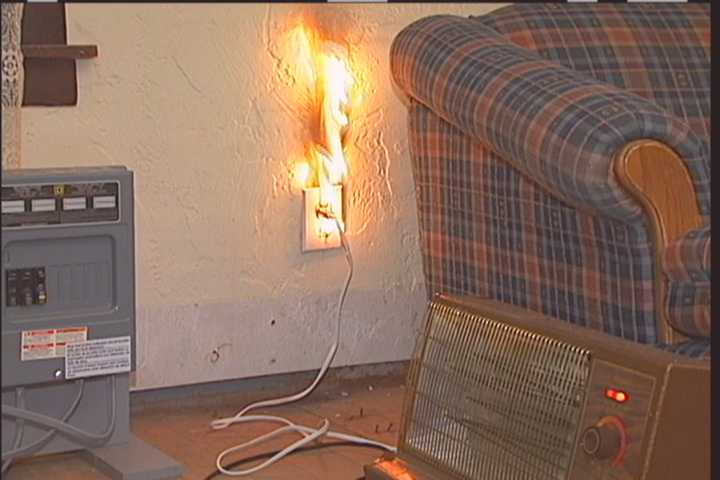
  • Half of home heating fire deaths resulted from fires caused by heating equipment too close to things that can burn, such as upholstered furniture, clothing, mattresses or bedding.

(Google Image) 

Smoking Materials
  • In 2010, smoking materials started and estimated 17,500 home structure fires, resulting in 540 deaths, 1,320 injuries and $535 million in direct property damage. Smoking materials are the leading cause of home fire deaths.
  • Sleep was a factor in two of every five home smoking material fire deaths. Possible alcohol impairment was reported in one quarter of these deaths.
  • In recent years, Canada and the United States have required that all cigarettes sold must be “fire safe,” that is have reduced ignition strength and less likely to start fires.

(Google Image) 

Electrical
  • Half (49%) of home electrical fires involved electrical distribution or lighting equipment. Other leading types of equipment were washer or dryer, fan, portable or stationary space heater, air conditioning equipment, water heater and range.
  • In 2010, electrical failures or malfunctions were factors in an estimated 46,500 home structure fires resulting in 420 deaths, 1,520 injuries and $1.5 billion in property damage.

(Google Image) 

Candles
  • On average, there are 35 home candle fires reported per day.
  • More than one-third of these fires started in the bedroom.
  • More than half of all candle fires start when things that can burn are too close to the candle.
  • In 2010, candles caused 3% of home fires, 4% of home fire deaths, 6% of home fire injuries and 5% of direct property damage from home fires.

(Google Image) 

Home Fire Sprinklers
  • Automatic fire sprinkler systems cut the risk of dying in a home fire by about 83%.
  • Home fire sprinklers can contain and may even extinguish a fire in less time than it would take the fire department to arrive on the scene.
  • Sprinklers are highly effective because they react so quickly in a fire. They reduce the risk of death or injury from a fire because they dramatically reduce the heat, flames and smoke produced, allowing people time to evacuate the home.


Be sure to download and print Sparky’s “Home Fire SafetyChecklist” and make sure your home is prepared.

Remember to be fire and safety aware everyday – if you see something that is a potential hazard – fix it then!

References and Links:


Monday, September 10, 2012

Assisted Living Week

(Google Image) 

By Terry Orr

Most baby-boomers can recall the negative images, information and horror stories while they were growing up regarding nursing homes or place where old folks go to die.  In the early 1990’s, my grandmother moved into a skilled nursing/assisted living facility and her experience open the doors for other family members to follow.

Assisted living as it exists today emerged in the 1990s as an eldercare alternative on the continuum of care for people, for whom independent living is not appropriate but who do not need the 24-hour medical care provided by a nursing home and are too young to live in a retirement home. Assisted living is a philosophy of care and services promoting independence and dignity.

Established by National for Assisted Living (NCAL) in 1995, National Assisted Living Week® provides a unique opportunity for residents, families, staff, volunteers, and the surrounding community to come together to give residents a variety of exciting events and activities that show them how much you care about and love them. The 2012 theme, “Art for the Ages”, will inspire creativity and participation and will grab the attention of media.

(Google Image) 
Keep these tips with you as you investigate your options and be sure to keep detailed notes on each community you visit:
  • Have a clear understanding of your family member’s needs
  • Ask lots of questions related to pricing and what is (and isn’t!) included in the monthly fee.
  • Pay close attention to the staff and ask questions about their credentials and training
  • Understand how the community handles increased level of care needs
  • Investigate the opportunities for socialization and recreation


12 Tips for a Smooth Transition to Assisted Living:
  1. Find the right community. If the residents and staff are friendly, this will go a long way in making an assisted living facility feel like home. Browse all licensed assisted living options in your area and research those that look attractive.
  2. Stay close. When family and friends are close, they visit more frequently. Visits are good, and make everyone feel a little better.
  3. Highlight the good stuff. Is the floor plan perfect? Is there a yoga class twice a week? Will the resident get help with difficult chores like laundry?
  4. Don’t take over. Assisted living residents should maintain a sense of independence. Their opinions matter and they still have a lot of control over choices that concern them.
  5. Don’t ignore negative emotions. Being sad is normal, and moving is a traumatic event no matter where you go or what you leave behind. Always listen to concerns.
  6. Throw a small home warming party. You can bring cherished items or new items and decorate, but it always helps when you can find a reason to celebrate.
  7. Keep an eye on your loved one’s health. Don’t assume that someone else is taking care of everything. When you are actively involved, everyone benefits.
  8. Find resident activities. Don’t wait to join the walking club or the book club or the bingo game every Thursday evening. Residents who get involved in activities early make friends more quickly and have a less difficult time becoming acclimated to their new surroundings.
  9. Eat together. Eating together a couple of times a week can be a great way to keep in touch and maintain that family bond. Plus, residents may socialize more when there is someone new to introduce.
  10. Don’t make promises you can’t keep. Dealing with the disappointment of a missed lunch date or special visit is always difficult. Follow through with your promises.
  11. Help with packing. It really is a chore to pack and sort a lifetime’s worth of belongings. Offering to help lessens the burden.
  12. Talk to a counselor. Sometimes the transition is difficult despite our best efforts to make it as easy and painless. Don’t be afraid to seek comfort from a listening ear.

(Google Image) 

References and Links:


Wednesday, August 8, 2012

Home Safety – 2012 Update

(Google Image) 

By Terry Orr

 Home Safety Tips:
  • Sound the Alarm: Install smoke detectors on every floor of your home and carbon monoxide detectors near sleeping areas. If already installed, test them! Tip: Replace the batteries every daylight-saving time change.
  • Avoid Overload: Check for overloaded extension cords – usage should not exceed the recommended wattage.
  • Don’t Get Tippy: If young children are in the home, bookshelves and other furniture should be firmly secured with wall brackets to prevent tipping.
  • Paint Safe: Check walls for loose paint. If re-painting, do so in a well-ventilated area and consider VOC-free paint.
  • Childproof, Childproof, Childproof: Check your local library or online for complete lists of childproofing suggestions and see our Virtual Home Safety Tour for more ideas. Areas of particular danger include outlets, appliances, electronics, stairs and windows.
  • Cover Outlets: Cover all unused outlets to prevent children from sticking a finger in the socket.
  • Watch Cord Placement: Extension cords should not be placed under rugs or heavy furniture, tacked up or coiled while in use.
  • Get Grounded: All major appliances should be grounded. Be sure to check your ground fault circuit interrupters regularly.
  • Plan Your Escape: Practice a fire escape plan with your family where you identify two exits for every room and what to do with young children.
  • Give Your Air Heater Some Space: All air heaters should be placed at least three feet from beds, curtains or anything flammable.
  • Keep Extinguishers Handy: Place all-purpose fire extinguishers in key locations in your home – the kitchen, bedroom and basement. Be sure to check expiration dates regularly and know how to use them safely.
  • Create a Safe Exit: In addition to alarms and extinguishers, consider an escape ladder if your home has two floors. Keep emergency numbers and contacts readily available by the phone.
  • Unplug Appliances: Unplug appliances and electronics when not in use and store them out of reach.
  • Go New in the Nursery: Check that all painted cribs, bassinettes and high chairs were made after 1978 to avoid potential lead paint poisoning.
  • Cool Your Jets: Set your water heater below 120 degrees Fahrenheit to avoid potential burns and to save energy.
  • Put Away Medications: Take medications and medical supplies out of your purse, pockets and drawers, and put them in a cabinet with a child safety lock.
  • Look for UL: The UL Mark appears on products that have been tested, verified and inspected for safety. Make sure to look for it to keep your holidays safe and bright.

(Google Image) 

References and Links:


(Google Image) 

Friday, April 20, 2012

Home Improvement


(Google Image) 
By Diane Forrest

This is the first of a 6 month series for home improvements.  Since spring has sprung, there are a few things you need to do to your home now, to prevent any damage later.  You have cleaned up the inside now I’m sure, since spring cleaning day was last month, and with the great weather and spring fever now is the time that many of us start cleaning up our winter debris and making plans for our home projects. Here are a few tips on spring updates to help you get the most out of the season.

(Google Image)

  • Check for loose or damaged gutters. Poor drainage systems can result in water damage to your basement or crawlspace.
  • Check your roof for winter damage. Wind, ice, and snow can be harsh on your roof.
  • Have your chimney cleaned and checked for damages by a licensed chimney sweep.
  • Remove firewood stored close to the house. Properly stored, firewood would be at least 2 feet from the structure and 18 inches off of the ground.
  • Check your outdoor faucets for winter damage.
  • Have your air conditioning units cleaned and serviced for the upcoming season.
  • Inspect concrete slabs for damage and movement; take the steps necessary to fill in cracks and seal surfaces
  • Inspect wood trim around windows doors and railings for damage. Make repairs before spring rains create further damage.

(Google Image)
Possibly this spring your attention is also being pulled to larger projects. Maybe you’re finally installing that pool you’ve been thinking about, redoing a kitchen or bathroom or even planning an addition to the house. Some projects both small and large can affect your homeowner’s insurance. If you have projects in mind, give your agent a call to be sure that you have the proper coverage in place.

(Google Image)
After you spend a weekend or two getting your house in tip top shape, it will be time to sit back and enjoy the summer, sitting outside and swatting mosquitoes.  Let us know if you have any other spring home improvement tips. 

(Google Image)

Saturday, January 14, 2012

Organize Your Home


Enough!
(Google Image) 

By Akindman,

This is the third of four articles this month regarding organization – January seems like a great time to clean things up and get the New Year started off on the right foot.  There are hundreds of thousands of folks offering free advice, professional services, books, videos, TV specials on getting one’s life and surrounds organized.  My Google search on ‘organize your home’ yielded more than 54 million results. Searching the same topic under books on Amazon.com yielded 652 books.

(Google Image) 
From the lessons learned department – the easy part is getting things where they belong and the hard part is getting the family to help maintain it!  Learning new habits is a true challenge for most of us, especially when we have so many bad habits when it comes to putting things away – in their proper place.

(Google Image) 
Getting your house organized will go a long way to maximizing efficiency. There is no single right way to do it: The trick lies in finding the way that works best for you.

(Google Image) 
Here are a few of the Web Sites that I reviewed and believe you might find helpful in your home organizing endeavors:

Organized Home - Clean House, Cut Clutter, Get Organized at Home! (http://organizedhome.com/)

HGTV Start at Home (http://www.hgtv.com/topics/organization/index.html) - Simple storage solutions and 1-day projects.

Unclutter (http://unclutterer.com/2008/05/27/where-to-start-organizing-your-home/) suggest four ways to get started: 1) Start by organizing the area you first see in the morning; 2) Start by organizing the area you first see when you come home after work; 3) Start with the area of your home that makes you seethe; and 4) Start at the top and work your way down.

While reading magazines, paper or browsing the internet, I am always looking for neat ideas and that might me.  Here are a few images that might appeal to you:

(Google Image) 

(Google Image) 

(Google Image) 

(Google Image) 
 Now it is time for you to get started and tackle you home.  Please let us know some of your ideas and how things went for you this year!

Happy Birthday Dad!

  October 15, 2023 Each day, I walk into my den to see what in new and what are my ‘to do’ items for the day and say good morning, Dad. This...