Showing posts with label Ovarian. Show all posts

Friday, September 14, 2012

Ovarian Cancer Awareness Month

(Google Image) 

By Nurse Diane

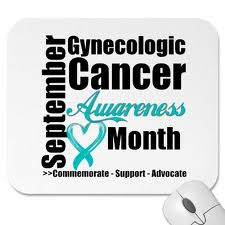
Earlier this month we told you that is was gynecologic cancer awareness month.  Included in the group are Ovaries.  Ovarian Cancer is one of the most deadly of women's cancers. Each year, approximately 21,880 women will be diagnosed with ovarian cancer. In 2010, approximately 13,850 women will die in the United States from ovarian cancer. Many women don't seek help until the disease has begun to spread, but if detected at its earliest stage, the five-year survival rate is more than 93%. Recent research suggests that together the four symptoms of: bloating, pelvic or abdominal pain, difficulty eating or feeling full quickly and urinary urgency or frequency may be associated with ovarian cancer.  Below is a copy of the Presidential Proclamation:

NATIONAL OVARIAN CANCER AWARENESS MONTH, 2012

BY THE PRESIDENT OF THE UNITED STATES OF AMERICA
A PROCLAMATION
 

This year, thousands of American women will lose their lives to ovarian cancer. They are mothers and daughters, sisters and grandmothers, community members and cherished friends -- and the absence they leave in our hearts will be deeply felt forever. During National Ovarian Cancer Awareness Month, we honor those we have lost, show our support for women who bravely carry on the fight, and take action to lessen the tragic toll ovarian cancer takes on families across our Nation.
Sadly, women are all too often diagnosed with this disease when it has already reached an advanced stage. Because early detection is the best defense against ovarian cancer, it is essential that women know the risk factors associated with the disease. Women who are middle-aged or older, who have a family history of ovarian or breast cancer, or who have had certain cancers in the past are at increased risk of developing ovarian cancer. Any woman who thinks she is at risk of ovarian cancer or who experiences symptoms, including abdominal pain, pressure, or swelling -- should talk with her health care provider. To learn more, visit www.Cancer.gov.
Ongoing progress in science and medicine is moving us forward in the battle against ovarian cancer, and my Administration remains committed to improving outcomes for women suffering from this devastating illness. Through agencies across the Federal Government, we are continuing to invest in research that paves the way for a new generation of tests and treatments. Through the Centers for Disease Control's Inside Knowledge campaign, we are working to raise awareness about the signs and symptoms of ovarian cancer. The Affordable Care Act already bans insurance companies from dropping a woman's coverage because she has ovarian cancer, and from placing lifetime or restrictive annual dollar limits on her coverage. Beginning in 2014, the law will also prohibit insurers from denying coverage or charging higher premiums because a woman has ovarian cancer -- or any other pre-existing condition. 
 Ovarian cancer affects the lives of far too many women every year, and the tragedy it leaves in its wake reverberates in communities across our country. This month, we stand with all those who have known the pain of ovarian cancer, and we rededicate ourselves to the pursuit of new and better ways to prevent, detect, and treat this devastating disease.
NOW, THEREFORE, I, BARACK OBAMA, President of the United States of America, by virtue of the authority vested in me by the Constitution and the laws of the United States do hereby proclaim September 2012 as National Ovarian Cancer Awareness Month. I call upon citizens, government agencies, organizations, health care providers, and research institutions to raise ovarian cancer awareness and continue helping Americans live longer, healthier lives. I also urge women across our country to talk to their health care providers and learn more about this disease.
(Google Image) 
September is Ovarian Cancer Awareness Month.  I urge you to visit your gynecologist if you have not done so this year, and also encourage all the women in your life to be checked as well.  Early detection can provide a successful survival rate.

(Google Image) 

Thursday, September 6, 2012

Gynecologic Cancer Awareness Month

(Google Image) 

By Nurse Diane

I was due later that week for an appointment with the gynecologist when early one morning I received a call from his office: I had been rescheduled for early that morning at 9:30am. I had just packed everyone off to work and school and it was around 8:45 already. The trip usually took about 35 minutes so I didn't have any time to spare. As most women do, I'm sure, I like to take a little extra effort over hygiene when making such visits, but this time I wasn't going to be able to make the full effort. So I rushed upstairs, threw off my dressing gown, wet the washcloth and gave myself a wash in "that area" in front of the sink, taking extra care to make sure that I was presentable. I threw the washcloth in the clothes basket, donned some clothes, hopped in the car and raced to my appointment. I was in the waiting room only a few minutes when he called me in. Knowing the procedure, as I'm sure all women do, I hopped up on the table, looked over at the other side of the room and pretended I was in Hawaii or some other place a million miles away from here. I was surprised when he said: "My...we have taken a little extra effort this morning, haven't we?" but I didn't respond. The appointment over, I heaved a sigh of relief and went home. The rest of the day went as normal, some shopping, cleaning and the evening meal, etc. At 8:30 that evening my 14 year old daughter was getting ready for a school dance, when she called down from the bathroom, "Mom, where's my washcloth?"I called back for her to get another from the cabinet. She called back, "No, I need that one that was here by the sink. It had all my glitter and sparkles in it."
(Google Image) 
Going to the gynecologist can be a very embarrassing procedure for some, however it is a very necessary examination used to detect any possibility of cancer.  Gynecologic cancer is any cancer that starts in a woman's reproductive organs.  Five main types of cancer affect a woman's reproductive organs: cervical, ovarian, uterine, vaginal, and vulvar. In 2008, 83,662 women in the United States were diagnosed with a gynecologic cancer, and 27,813 women died from it. . When gynecologic cancers are found early, treatment is most effective.

(Google Image) 
There is no way to know for sure if you will get a gynecologic cancer. That's why it is important to pay attention to your body and know what is normal for you, so you can recognize the warning signs or symptoms of gynecologic cancer.
(Google Image) 
If you have vaginal bleeding that is unusual for you, talk to a doctor right away. You should also see a doctor if you have any other warning signs that last for two weeks or longer and are not normal for you. Symptoms may be caused by something other than cancer, but the only way to know is to see a doctor.

Some warning signs to look for include:
  • Abnormal vaginal bleeding or discharge;
  • Pelvic pain or pressure;
  • Abdominal or back pain;
  • Bloating;
  • Change in bathroom habits;
  • Burning or itching of the vulva; and or
  • Changes in color of the vulva or rash sores or warts.


Prevention:
  • Some gynecologic cancers are caused by the human pusillanimous (HPV) a very common sexually transmitted infection. Vaccines protect against the HPV types that most often cause cervical, vaginal, and vulva cancers. It is recommended for 11- and 12-year-old girls. (Note: The vaccine can be given to girls beginning at age 9.) It also can be given to females who are 13–26 who did not get any or all of the shots when they were younger. Ideally, girls should get three doses of this vaccine before their first sexual contact.
  • Annual PAP smears should also be performed by the age of 30, sometimes even younger if there is a history of gynecological cancers in the family.
  • If you have any questions about the screenings or your possibility of risk, check with your doctor.

(Google Image) 
September is Gynecologic Cancer Awareness Month, and you are encouraged to schedule a checkup with your gynecologist, or let your wife, mother, aunts, girlfriends, any female in your life know that their health is very important and prevention and early detection is necessary for a long healthy life.   For more information about gynecological cancers, visit this site:  http://www.cdc.gov/cancer/gynecologic/index.htm

Thursday, September 15, 2011

Ovarian Cancer Awareness Month

By Diane Forrest, RN


A few days ago we told you about gynecological cancers, those included cervical, ovarian, uterine, vaginal, and vulvar cancer.  Ovarian cancer is the fifth most common cancer among women, and it causes more deaths than any other type of female reproductive cancer.  Ovarian cancer is cancer that starts in the ovaries. The ovaries are the female reproductive organs that produce eggs. The cause is unknown; however, the risk for developing ovarian cancer appears to be affected by several factors.


Risk Factors include:
  • Women with a personal history of breast cancer or a family history of breast or ovarian cancer have an increased risk for ovarian cancer.
  • Older women are at highest risk for developing ovarian cancer
  • Women who take estrogen replacement only


Symptoms
  • Bloating
  • Difficulty eating
  • Abdominal or pelvic pain
  • Abnormal menstrual cycles
  • Nausea, vomiting, constipation

It is difficult to diagnose Ovarian Cancer, because these symptoms could be blamed on many different problems.  Tests such as blood tests, pregnancy tests, MRI, CT and ultrasound are used to determine the presence of Ovarian Cancer.

Treatment

Treatment includes surgery, a complete hysterectomy or just removal of the ovaries and chemotherapy.  If detected early, there is a better chance of survival.

For More information go to this site:  http://www.cancer.gov/cancertopics/types/ovarian

Happy Birthday Dad!

  October 15, 2023 Each day, I walk into my den to see what in new and what are my ‘to do’ items for the day and say good morning, Dad. This...