Showing posts with label Poverty. Show all posts

Monday, January 6, 2014

War on Poverty – 2014 Update


By Terry Orr

Poverty continues to impact America and other countries throughout the planet and in America – all we need to do, is look into the mirror – we only have ourselves to blame for this nightmare.  Center stage is our ‘greed’ and lack of understanding what is the right thing to do for the betterment of mankind.

Sample of our own undoing of America:
  • Illegal immigration
  • Outsourcing jobs to other countries
  • Manufacturing done in other countries
  • Failure to enforce current laws
  • Failure to monitor government programs
  • Failure to achieve better education in America
  • Laws, Policies, Directives that significantly impact American Citizens
  • Allowing other Countries the ability to impact our future
  • Spending Trillions abroad


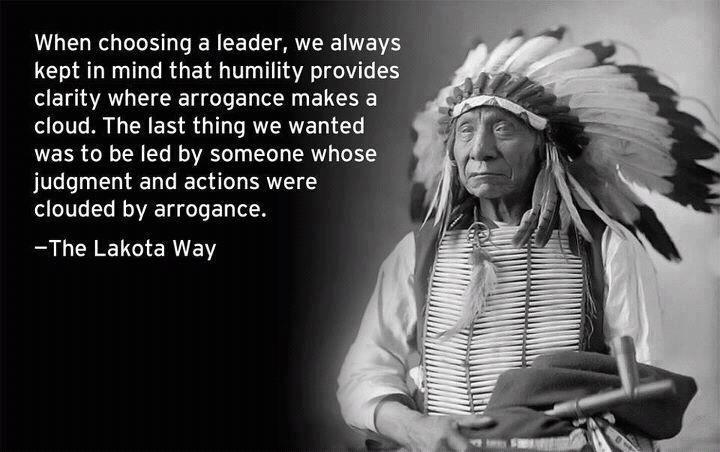
Eight of the ten Native American Commandments provide each of us with the basic guidance to finding the right solution to poverty and most of our problems we face in America today.

1. Treat the Earth and all that dwell thereon with respect.
2. Remain close to the Great Spirit, in all that you do.
3. Show great respect for your fellow beings. (Especially Respect yourself)
4. Work together for the benefit of all Mankind.
5. Give assistance and kindness wherever needed.
6. Do what you know to be right. (But be careful not to fall into self-righteousness)
7. Look after the well being of mind and body.
8. Dedicate a share of your efforts to the greater good.
9. Be truthful and honest at all times. (Especially be truthful and honest with your self)
10. Take full responsibility for your actions

Please give this some thought and pitch in to make a difference.  Thank you.


References and Links

The New York Times published:

“The War on Poverty at 50” by Jared Bernstein - a senior fellow at the Center on Budget and Policy Priorities in Washington and a former chief economist to Vice President Joseph R. Biden Jr. (http://economix.blogs.nytimes.com/2014/01/06/the-war-on-poverty-at-50/?_r=0)

“50 Years Later, War on Poverty Is a Mixed Bag”, by ANNIE LOWREY and published on January 4, 201

Other Related Postings:

“What I learned in the Poverty War” Work, not welfare, uplifts the poor - by Peter Cove (http://www.city-journal.org/2012/22_4_poverty.html )

“Tracing the War on Poverty” by Julie Ault & Martin Beck (http://www.artlies.org/article.php?id=1548&issue=56&s=0 )

“The Next War on Poverty” by Peter Edelman published in the Democracy Issue #15 Winter 2010 (http://www.democracyjournal.org/15/6727.php?page=all )

Monday, January 7, 2013

War on Poverty Day


(Google Image)

By Diane Forrest

While checking the schedule of articles for this month when I passed over this one I thought to myself, well this is a current issue and a problem that faces the country today.  However, when I began researching I discovered that the phrase War on Poverty was first coined in 1964 during President Lyndon Johnson's State of the Union Address on January 8.
(Google Image)

War on Poverty was the unofficial name for legislation that was introduced in response to a national poverty rate of around nineteen percent.   As a part of the Great Society, Johnson believed in expanding the government's role in education and health care as poverty reduction strategies.

According to Wikipedia, The Office of Economic Opportunity was the agency responsible for administering most of the War on Poverty programs created during Johnson's Administration, including VISTA, Job Corps, Head Start, Legal Services and the Community Action Program. The OEO was established in 1964 and quickly became a target of both left-wing and right-wing critics of the War on Poverty. Directors of the OEO included Sargent Shriver, Bertrand Harding, and Donald Rumsfeld.
(Google Image)

Poverty continues to be a problem today.  In 2004, more than 35.9 million, or 12% of Americans including 12.1 million children, were considered to be living in poverty with an average growth of almost 1 million per year.  There are many government programs available to assist those in need, however with the fiscal cliff the country is currently teetering on, many government programs have been cut or reduced to help the country's economic needs.
(Google Image)

Today is War on Poverty Day, the purpose is it recognize the introduction in 1964, and to make you aware that the problem still exists today.  Ways you can help include financial donations to your favorite charity, donations of your time assisting in soup kitchens or a meals on wheels program, or donating items from your home such as blankets or coats to those in need.   So as you think about the War on Poverty today, please think of some way in which you can join the battle and help in this fight.

Sunday, January 8, 2012

War on Poverty


(Google Image) 

By Akindman,

Admitting Defeat in the War on Poverty
Randy Hekman - Thursday, November 10, 2011

It's time our federal government in Washington admitted defeat in the federal War on Poverty. All this ill-fated 'War' has done is put America deeper in debt, make whole generations of Americans enslaved to government handouts, and weakened American families.

The fact that we have lost the War on Poverty is incontrovertible: recent news indicated that the number of the "poorest poor" of Americans, those at or below 50 percent of the poverty level, have reached new levels never before recorded. One out of every 15 Americans, about 20.5 million qualify for this dubious distinction. The percentage (6.7%) has never been higher. According to the U.S. Census Bureau, the percentage of these "very poor" rose in 300 of America's 360 largest metro areas in 2010. Nearly 15 percent of Americans, (45.8 million people) now receive food stamps: that includes about one in four American children.

The federal government's War on Poverty began in 1964 as part of President Johnson's plan to build the Great Society. As with most government programs, what began modestly has grown to where we now spend 13 times more than was spent in the 1960s. While all the real wars since the Revolution have cost taxpayers about $6.4 trillion, the War on Poverty has cost more than $16 trillion—ironically very close to our national debt which very soon will pass the $15 trillion mark. This is no coincidence. Whenever a nation decides it's going to meet all the needs of its citizens, it is guaranteed to go bankrupt. Witness the economic chaos in Greece, Italy and Spain.

If all this federal expense were uniformly helping our people, it would be one thing. But making many otherwise capable people perpetually dependent on governmental handouts is neither loving nor ennobling; it is demeaning. Franklin Roosevelt said in 1935, "Continued dependence upon relief induces a spiritual and moral disintegration fundamentally destructive to the national fiber. To dole out relief in this way is to administer a narcotic, a subtle destroyer of the human spirit."

Finally, federal welfare has hurt the American family. Part of the welfare structure is a "marriage penalty" which is a not-so-subtle inducement to bear children out of wedlock. Over 40 percent of children in the U.S. are born to women not married, a major rise from when the War on Poverty began. In some parts of our urban areas—like Detroit—this birth-out-of-wedlock rate exceeds 80 percent. This is a recipe for generational poverty. President Ronald Reagan said in 1988, "With the best of intentions, government [welfare programming] created a poverty trap that wreaks havoc on the very support system the poor need most to lift themselves out of poverty: the family. Dependency has become one enduring heirloom, passed from one generation to the next, of too many fragmented families."

What's the answer? For generations before 1964, Americans helped one another as neighbors, extended families, non-profits and churches met the needs of the poor. Real welfare requires real compassion. And that takes human-to-human contact, caring, mentoring, encouragement and—sometimes—firmness. "If a man will not work, he shall not eat," says a verse from the New Testament.

As to jobs, there is a great new approach to moving people off welfare to sustainable jobs using an approach called social enterprise. This is a marriage between business and community that is totally a private effort, but still produces a major positive governmental and economic impact. In this vein, over the past 8 years, Fred Keller and his Cascade Engineering in Grand Rapids has helped over 400 people escape welfare dependency. As of last count, 63 percent are still off the welfare rolls. We need to export this program to every part of Michigan now. It's a win-win-win for our nation's economy, for the individual, and for his or her family.

Corporate CEO Reza Mokhtarian Looks To Continue His War On Poverty In 2012 (http://www.prlog.org/11760940-corporate-ceo-reza-mokhtarian-looks-to-continue-his-war-on-poverty-in-2012.html)


Can we in America work together and put an end to poverty in our country?

(Google Image)

Happy Birthday Dad!

  October 15, 2023 Each day, I walk into my den to see what in new and what are my ‘to do’ items for the day and say good morning, Dad. This...