Showing posts with label vaccination. Show all posts

Tuesday, December 4, 2012

National Influenza Vaccination Week December 2 – 9, 2012

(Google Image) 

By Nurse Diane

Along with the holiday season...there is another season that is rapidly approaching.  That is the Flu season.  Flu outbreaks occur during the months of December, January and February, and those most at risk include the elderly, pregnant women and children.  The flu is a contagious respiratory illness caused by flu viruses. It can cause mild to severe illness, and at times can lead to death. The flu is different from a cold. The flu usually comes on suddenly. People who have the flu often feel some or all of these symptoms:
  • Fever or feeling feverish/chills
  • Cough
  • Sore throat
  • Runny or stuffy nose
  • Muscle or body aches
  • Headaches
  • Fatigue (tiredness)
  • Some people may have vomiting and diarrhea, though this is more common in children than adults.


Other complications from the flu include pneumonia, bronchitis or ear infections.  It can also worsen medical conditions such as asthma, and Congestive Heart Failure.
(Google Image) 
People with flu can spread it to others up to about 6 feet away. Most experts think that flu viruses are spread mainly by droplets made when people with flu cough, sneeze or talk. These droplets can land in the mouths or noses of people who are nearby or possibly be inhaled into the lungs. Less often, a person might also get flu by touching a surface or object that has flu virus on it and then touching their own mouth or nose.
(Google Image) 
According to the CDC, most healthy adults may be able to infect others beginning 1 day before symptoms develop and up to 5 to 7 days after becoming sick. Children may pass the virus for longer than 7 days. Symptoms start 1 to 4 days after the virus enters the body. That means that you may be able to pass on the flu to someone else before you know you are sick, as well as while you are sick. Some persons can be infected with the flu virus but have no symptoms. During this time, those persons may still spread the virus to others.
(Google Image) 
Ways to protect yourself from getting the flu is to Get the flu shot, proper hand washing, and avoid touching your eyes and mouth unless you have washed your hands.

This week is National Influenza week, a reminder to get your flu shot before an outbreak happens, not only for your own protection, but to protect those around you.

Saturday, August 4, 2012

Immunization Awareness Month – 2012 Update


(Google Image) 

By Diane Forrest, RN

Have you been reading about the outbreak of whooping cough?  It appears that it is spreading again.  Why is this happening?  Isn't there a vaccine for that?  The trouble is some parents are choosing not to vaccinate their children.  Vaccination records were easy to obtain.  They have to be submitted before entering school. Another problem is, many families are choosing to homeschool their children, and some of those who homeschool do not vaccinate their children do to various beliefs.

National Immunization Awareness Month is the perfect time to promote immunizations and remind family, friends, and coworkers to get caught up on their shots.

(Google Image) 
Vaccinations are very important to control many diseases.  Take a look at Small pox.  This disease has been eradicated here in the US, and most other countries.  Thanks to WHO when they got the word out about vaccinations.

(Google Image) 
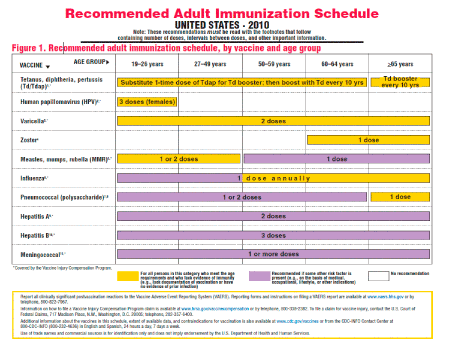
Vaccinations are not just for children, there are several vaccines available for adults as well.  Vaccines for the flu, shingles, tetanus, and other diseases.  A chart for adults is pictured above.
(Google Image) 
August is Immunization Awareness Month.  This month was chosen because children are starting school, or returning back to school and need to have their records, and updates.  It is also good times for adults who plan on traveling to get their records checked, and start appropriate shots.

If you have or know children who have not been immunized, please take them or encourage their parents to take proper measures to protect them from acquiring life threatening diseases.

(Google Image) 

What childhood vaccines are recommended, and at what ages they should be given?

Hepatitis B vaccine:
  • First dose at birth before discharge
  • Second dose at 1 to 2 months
  • Third dose at 6 to 18 months


HIB vaccine:
  • First dose at 2 months
  • Second dose at 4 months
  • Third dose at 6 months (depending upon type of Hib vaccine given)
  • Fourth dose at 12 to 15 months


Inactivated polio vaccine:
  • First dose at 2 months
  • Second dose at 4 months
  • Third dose at 6 to 18 months
  • Fourth dose at 4 to 6 years


DTaP vaccine:
  • First dose at 2 months
  • Second dose at 4 months
  • Third dose at 6 months
  • Fourth dose at 15 to 18 months
  • Fifth dose at 4 to 6 years
  • Tdap is recommended at 11 years


Pneumococcal vaccine:
  • First dose at 2 months
  • Second dose at 4 months
  • Third dose at 6 months
  • Fourth dose at 12 to 18 months


Rotavirus vaccine:
  • First dose at 2 months
  • Second dose at 4 months
  • Third dose at 6 months (depending upon type of rotavirus vaccine given)


Hepatitis A vaccine:
  • First dose at 12 months
  • Second dose at 18-30 months


Influenza vaccine:
  • First dose at 6 months (requires a booster one month after initial vaccine)
  • Annually until 5 years


MMR vaccine:
  • First dose at 12 to 15 months
  • Second dose at 4 to 6 years


Varicella vaccine:
  • First dose at 12 to 15 months
  • Second dose at 4 to 6 years


Meningococcal vaccine:
  • First dose at 11 years
  • Second dose at 16 years


Human papillomavirus vaccine:
  • First dose at 11 years
  • Second dose two months after first dose
  • Third dose six months after first dose


Links:


Saturday, September 24, 2011

Adult Immunization Awareness Week

As Larry the Cable guy would say...


In its 18th consecutive observance, National Adult Immunization Awareness Week emphasizes the need for health-care providers and public health officials to intensify their adult vaccination efforts. This week is typically held in the early fall of every year, before the height of cold and flu season. In addition to the influenza and pneumococcal vaccines, the Centers for Disease Control recommends all adults be vaccinated against diphtheria, hepatitis A and B, measles, mumps, rubella, tetanus, meningococcal disease, and varicella (chickenpox).

Many adults are unaware of the potential risks of vaccine-preventable disease, the need for booster doses or the availability of new vaccines. So this September, talk to your health care provider or visit your public health department and find out if you're current on your immunization recommendations and get immunized today.

According to the CDC (Centers for Disease Control and Prevention), you never outgrow the need for vaccines. The immunizations you need as an adult are based on a variety of factors such as age, lifestyle, high-risk conditions, type and locations of travel, and previous immunizations. Throughout your adult life, you need immunizations to get and maintain protection against: flu, tetanus, diphtheria, pertussis, shingles, pneumococcal, HPV, etc.

  • Seasonal influenza (flu) - In general, anyone who is 6 months or older can benefit from the protection of a flu vaccination.
  • Tetanus, diphtheria, and pertussis (whooping cough) - for adults up to 64 years, one booster dose
  • Shingles - for adults 60 years and older
  • Pneumococcal disease - for adults 65 years and older, and adults with specific health conditions
  • Human papillomavirus (HPV) infection - for women 26 years and younger
  • Other vaccinations you may need include those that protect against hepatitis A, hepatitis B, chickenpox (varicella), and measles, mumps and rubella.

For the complete list of vaccination schedules for all ages, as well as vaccination recording forms please go to: http://www.cdc.gov/vaccines/recs/schedules/default.htm


Happy Birthday Dad!

  October 15, 2023 Each day, I walk into my den to see what in new and what are my ‘to do’ items for the day and say good morning, Dad. This...