Showing posts with label Immunization. Show all posts

Wednesday, September 26, 2012

Adult Immunization Awareness Week

(Google Image) 

By Terry Orr
In the Navy, getting your immunizations happen all too often for most of us – and stress the importance getting them when needed.  We fortunate to have a primary care doctor who makes sure that we keep current on all our shots and recommendations for once that may not be required, but make good sense to have them.  As adults, we owe it to ourselves, our family or love ones to be proactive and get those vaccines.
(Google Image) 
According to Adult Immunization.org, more than 50,000 US adults die each year from vaccine-preventable diseases and their complications, more than breast cancer, HIV/AIDS, or motor vehicle traffic accidents, yet overall vaccination rates remain low. Adult vaccinations can protect against illness, absenteeism from work, hospitalization, or even death; however, adult vaccination rates, on average, are far lower than the Healthy People 2020 goals for immunization and infectious diseases.
(Google Image) 
These suboptimal rates are not only taking a toll on the country's health; they are also impacting the bottom line: the estimated direct costs of treating just two vaccine-preventable illnesses — influenza and pneumonia — in adults in the US alone are over $35 billion per year.
(Google Image) 
10 Reasons To Be Vaccinated:
Vaccine-preventable diseases haven’t gone away;
Vaccines will help keep you healthy;
Vaccines are as important to your overall health as diet and exercise;
Vaccination can mean the difference between life and death;
Vaccines are safe;
Vaccines won’t give you the disease they are designed to prevent;
Young and healthy people can get very sick, too;
Vaccine-preventable diseases are expensive;
When you get sick, your children, grandchildren and parents are at risk, too; and
Your family and coworkers need you.

(Google Image) 
References and Links:

Saturday, August 4, 2012

Immunization Awareness Month – 2012 Update


(Google Image) 

By Diane Forrest, RN

Have you been reading about the outbreak of whooping cough?  It appears that it is spreading again.  Why is this happening?  Isn't there a vaccine for that?  The trouble is some parents are choosing not to vaccinate their children.  Vaccination records were easy to obtain.  They have to be submitted before entering school. Another problem is, many families are choosing to homeschool their children, and some of those who homeschool do not vaccinate their children do to various beliefs.

National Immunization Awareness Month is the perfect time to promote immunizations and remind family, friends, and coworkers to get caught up on their shots.

(Google Image) 
Vaccinations are very important to control many diseases.  Take a look at Small pox.  This disease has been eradicated here in the US, and most other countries.  Thanks to WHO when they got the word out about vaccinations.

(Google Image) 
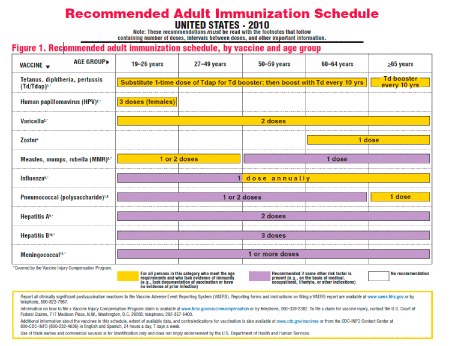
Vaccinations are not just for children, there are several vaccines available for adults as well.  Vaccines for the flu, shingles, tetanus, and other diseases.  A chart for adults is pictured above.
(Google Image) 
August is Immunization Awareness Month.  This month was chosen because children are starting school, or returning back to school and need to have their records, and updates.  It is also good times for adults who plan on traveling to get their records checked, and start appropriate shots.

If you have or know children who have not been immunized, please take them or encourage their parents to take proper measures to protect them from acquiring life threatening diseases.

(Google Image) 

What childhood vaccines are recommended, and at what ages they should be given?

Hepatitis B vaccine:
  • First dose at birth before discharge
  • Second dose at 1 to 2 months
  • Third dose at 6 to 18 months


HIB vaccine:
  • First dose at 2 months
  • Second dose at 4 months
  • Third dose at 6 months (depending upon type of Hib vaccine given)
  • Fourth dose at 12 to 15 months


Inactivated polio vaccine:
  • First dose at 2 months
  • Second dose at 4 months
  • Third dose at 6 to 18 months
  • Fourth dose at 4 to 6 years


DTaP vaccine:
  • First dose at 2 months
  • Second dose at 4 months
  • Third dose at 6 months
  • Fourth dose at 15 to 18 months
  • Fifth dose at 4 to 6 years
  • Tdap is recommended at 11 years


Pneumococcal vaccine:
  • First dose at 2 months
  • Second dose at 4 months
  • Third dose at 6 months
  • Fourth dose at 12 to 18 months


Rotavirus vaccine:
  • First dose at 2 months
  • Second dose at 4 months
  • Third dose at 6 months (depending upon type of rotavirus vaccine given)


Hepatitis A vaccine:
  • First dose at 12 months
  • Second dose at 18-30 months


Influenza vaccine:
  • First dose at 6 months (requires a booster one month after initial vaccine)
  • Annually until 5 years


MMR vaccine:
  • First dose at 12 to 15 months
  • Second dose at 4 to 6 years


Varicella vaccine:
  • First dose at 12 to 15 months
  • Second dose at 4 to 6 years


Meningococcal vaccine:
  • First dose at 11 years
  • Second dose at 16 years


Human papillomavirus vaccine:
  • First dose at 11 years
  • Second dose two months after first dose
  • Third dose six months after first dose


Links:


Saturday, September 24, 2011

Adult Immunization Awareness Week

As Larry the Cable guy would say...


In its 18th consecutive observance, National Adult Immunization Awareness Week emphasizes the need for health-care providers and public health officials to intensify their adult vaccination efforts. This week is typically held in the early fall of every year, before the height of cold and flu season. In addition to the influenza and pneumococcal vaccines, the Centers for Disease Control recommends all adults be vaccinated against diphtheria, hepatitis A and B, measles, mumps, rubella, tetanus, meningococcal disease, and varicella (chickenpox).

Many adults are unaware of the potential risks of vaccine-preventable disease, the need for booster doses or the availability of new vaccines. So this September, talk to your health care provider or visit your public health department and find out if you're current on your immunization recommendations and get immunized today.

According to the CDC (Centers for Disease Control and Prevention), you never outgrow the need for vaccines. The immunizations you need as an adult are based on a variety of factors such as age, lifestyle, high-risk conditions, type and locations of travel, and previous immunizations. Throughout your adult life, you need immunizations to get and maintain protection against: flu, tetanus, diphtheria, pertussis, shingles, pneumococcal, HPV, etc.

  • Seasonal influenza (flu) - In general, anyone who is 6 months or older can benefit from the protection of a flu vaccination.
  • Tetanus, diphtheria, and pertussis (whooping cough) - for adults up to 64 years, one booster dose
  • Shingles - for adults 60 years and older
  • Pneumococcal disease - for adults 65 years and older, and adults with specific health conditions
  • Human papillomavirus (HPV) infection - for women 26 years and younger
  • Other vaccinations you may need include those that protect against hepatitis A, hepatitis B, chickenpox (varicella), and measles, mumps and rubella.

For the complete list of vaccination schedules for all ages, as well as vaccination recording forms please go to: http://www.cdc.gov/vaccines/recs/schedules/default.htm


Saturday, April 23, 2011

World Meningitis Day


 bout Meningitis

Meningitis is an inflammation of the brain and spinal cord. It can be the result of infection by bacteria, viruses and fungi. Bacterial meningitis is the most serious type of meningitis, and it is often associated with a potentially life-threatening blood infection (septicaemia). The most common bacteria causing meningitis and septicaemia are:

·       Haemophilus influenzae type b (Hib);
·       Streptococcus pneumoniae (pneumococcal); and
·       Neisseria meningitidis (meningococcal).


Meningitis can develop rapidly and its symptoms often resemble the flu (e.g., fever, fatigue and headache), which makes it difficult for doctors to diagnose. Even with early and appropriate treatment, the rates of death and serious long-term effects of the disease can be high. Survivors often suffer serious long-term consequences, such as deafness, epilepsy, brain damage, and limb loss. While the disease can affect people of all ages, infants, children and adolescents are at an increased risk of infection. Immunizations against bacterial meningitis with those vaccines that are available is essential; no one should suffer from this disease.

About World Meningitis Day

World Meningitis Day – annually on 24 April – is dedicated to raising awareness of meningitis, underscoring the importance of prevention through vaccination and improving support for those dealing with the potentially devastating consequences of this disease. The global family has grown over the past two years and now reaches across the globe from North and South America, through Europe to the Middle East, into the Indian subcontinent and throughout South East Asia and the Far East to Australia to join hands across state lines, country borders and continents. The date of 24 April 2011 is significant because it overlaps with European Immunization Week, sponsored by the World Health Organization, and Vaccination Week in the Americas, promoted by Pan American Health Organization and supported by health authorities throughout the United States, Canada and Central America.

The Confederation of Meningitis Organizations’ Inc (CoMO) brings together patient groups and child health organizations’ from all over the world who are working toward the elimination of meningitis and its related septicaemia and who support those touched by these diseases.

CoMO is incorporated as a charitable body in Perth, Western Australia with Rules of Association formulated under Australian law.  The secretariat and Chief Executive’s office are located in the Telethon Institute for Child Health Research in Perth. The secretariat deals with administration of CoMO and all applications for membership.

CoMO currently has 29 members and associate members in 20 countries and is organised on a regional basis – The Americas, Europe & Africa and Asia Pacific; making members globally united and regionally enabled in the fight against meningitis and septiceamia.

By joining hands together and raising our voices CoMO and its members can make a difference to the spread of knowledge around the world about the signs and symptoms of meningitis and the means of prevention by vaccination.

Vaccines are now available to protect against many of the bacteria which cause meningitis and septicaemia.

A source of information for the latest research on meningitis and its related septicaemia is CoMO member Meningitis Research Foundation (UK). This organization has been funding research in this area for over 20 years and holds a biennial conference on topics surrounding these diseases.

Happy Birthday Dad!

  October 15, 2023 Each day, I walk into my den to see what in new and what are my ‘to do’ items for the day and say good morning, Dad. This...